By Akeel Lovell
Ever since the COVID-19 pandemic swept the world off its axis and put it into a constant spin of disrepair, many of us have been eagerly anticipating and guessing when the world will return to some sense of normalcy.
This unfortunate paradigm shift has left people thousands of people
either unemployed or working from home with businesses and schools being
closed. This of course means children will
be out of school.
At such a critical time in the educational sector, term 3 of the
school year, many wonders when school will reopen.
They also query what alternative method would be used to ensure
that students preparing for exams, such as the Barbados Secondary Schools'
Entrance Examination, will not be disadvantaged.
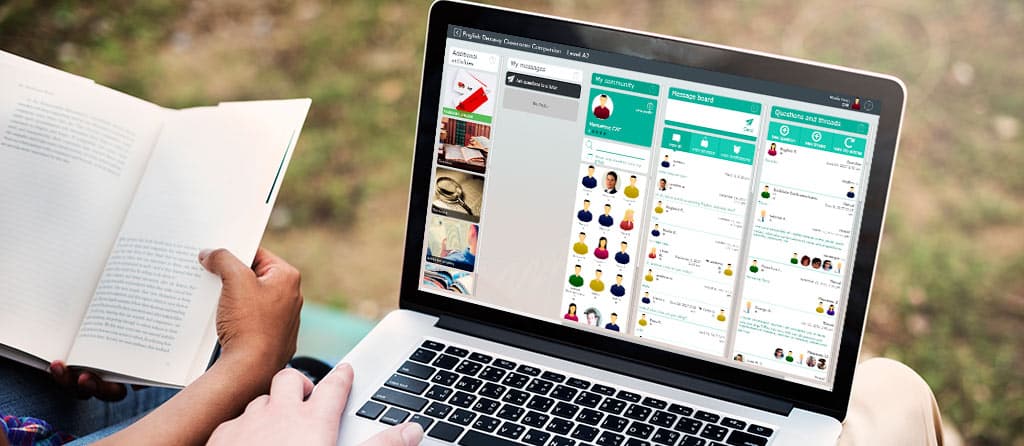
E-learning has been touted by Government as that alternative. However,
given this country’s diverse socio-economic-demographic, many cannot and do not
have access to the needed resources to
do so.
So, are we ready for E-learning?
 According to President of the Barbados Secondary Teachers Union
Marry-ann Redman, there are” certain considerations that have to be had” before
online learning can be implemented.
According to President of the Barbados Secondary Teachers Union
Marry-ann Redman, there are” certain considerations that have to be had” before
online learning can be implemented.
“Not all students have access to
computers. Not all students have access to Internet. Not all students have
access to electricity and libraries, as surprising as that may seem to some
people. That is the reality,” she said.
She continued, “And not all
teachers have access to computers in their home or even connectivity. And so,
as we move forward, we have to ensure that what we do is done in the most
effective way possible. In so far as no single child is disadvantaged, if
children do not have access to hardware and connectivity, then what provisions
must be put in place by those students as well”.
The Union head and educator also
said the teachers are also at a loss.
“Teachers are also parents and they
have their children in the woman environment in which they are to be working.
They also have many of them, their parents, the elderly parents in that home
environment in which they are supposed to be working. There are considerations,
too, even in circumstances where a computer might be available in anyone home.
That computer may be the parent’s computer. That parent may be working from
home. The student may need to have access to the computer at the same time that
the parent is working,” she said whiling an example.
When Prime Minister Mottley addressed the country on
the temporary disruption of classes on
April 11, 2020, she suggested that the way forward would entail “a long-term
plan” with respect to e-learning and distance learning.
Government has gone ahead with the and started using
the platform Google Classroom at primary and secondary school. However, it
would seem not many teachers can fully grasp the use of this setup.
From April 20 to 24, all public schools will be preparing to roll
out online teaching using the Google G Suite for Education platform.
The statement said this platform may be accessed from any PC,
laptop, tablet or smart mobile device.
The ministry emphasised the importance of education during the
curfew period and is working with providers and suppliers to ensure every child
has Internet access and devices to utilise the new elearning platform.
The acting PM Santia Bradshaw recently disclosed most of
teachers in the sector were trained to conduct classes online with more to done.
“With approximately 80
per cent of teachers already trained, the Ministry of Education,
Technological and Vocational Training (METVT) is seeking to utilize the
present period to facilitate training for the remainder of teachers in the
educational system,” she said.
According to the acting PM the country has the means to conduct e-learning,
it's just up to the teachers and students.
Comments
Post a Comment